Today we’re hitting the road, getting out of the city and heading towards the smaller towns of Gangtey and Punakha which gives me the perfect opportunity to give you a little insight on what it’s like to drive (or perhaps better, be a passenger) in Bhutan.
Let’s start with the fun fact that there are no traffic lights in Bhutan. Not a single one in the whole country. In the bustling city of Thimphu, there may occasionally be traffic police, but there are no traffic lights. And now that I think about it I didn’t see a single stop sign either so driving here is definitely an art form. I also don’t think there’s a straight road longer than a mile here. Just think of the roads as switchbacks. Back and forth every minute or two. Add to this cows, horses, donkeys and dogs all sharing what I would describe as one and a half lane roads (which means two cars can pass each other if both cars move to the far side of the road and go slow) it is a non-stop adrenaline rush to get from point a to point b and I am in awe of Tshering’s graceful navigation and delicate honking to get us there in one piece. Thankfully most of the cars are like large micro-machines and no one drives too fast so you’re going survive any mishaps (even without a seatbelt), and the animals have a pretty good chance too.
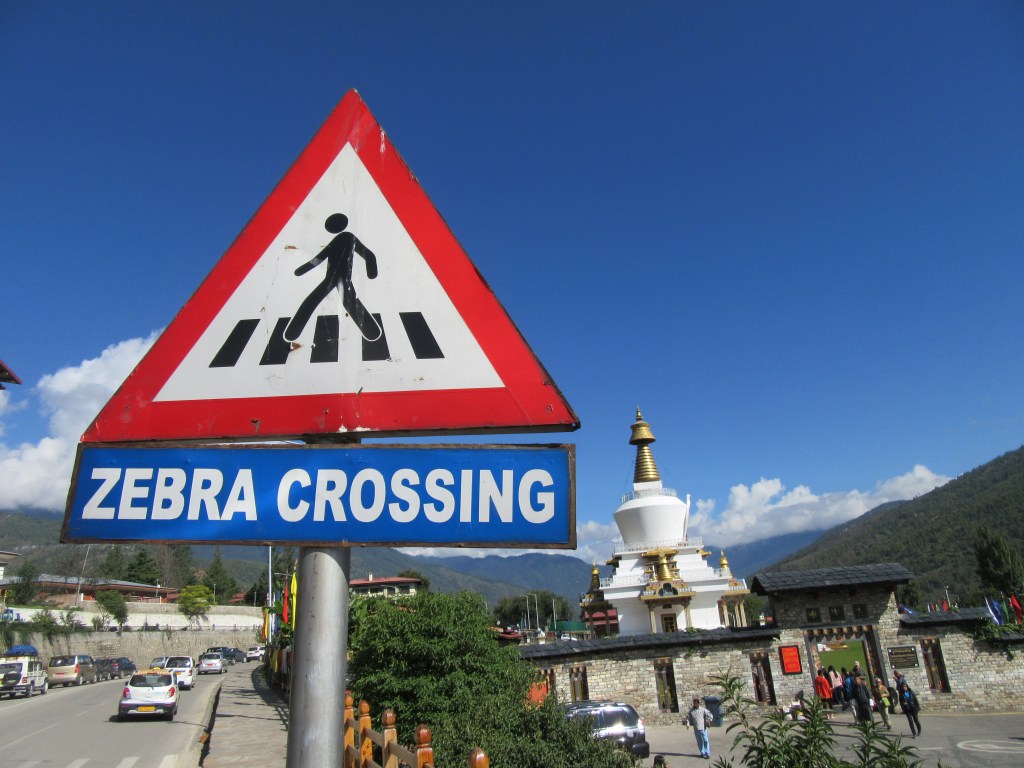


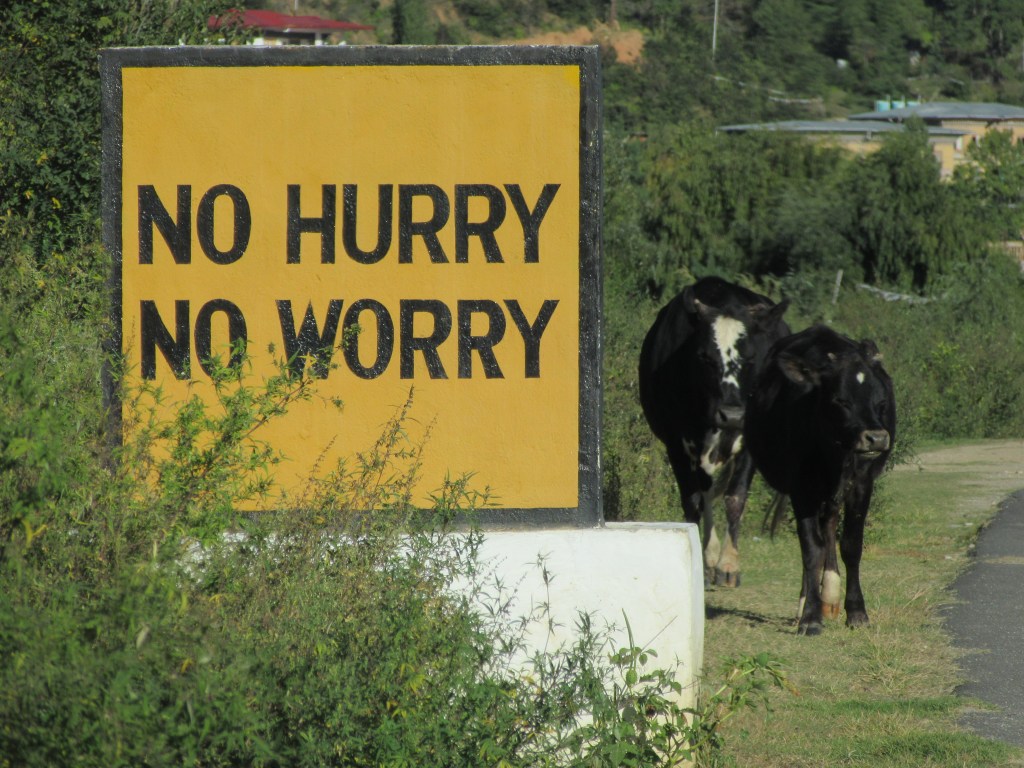


I spent the first two days in the front seat of the car so I could see everything but by the time our road trip day arrived, I decided to see if the backseat might offer just a little less carsickness. Turns out that was the right move. (Sorry Thinley).
The total drive time today was around five hours which gave us lots of time to get to know each other better. We talk about marriage and vegetarianism and happiness in Bhutan. Thinley explains that despite the impressions many of us outside of Bhutan have, Bhutan is actually not the happiest country in the world, that would be Iceland. However, even though they might not have all the ‘things’ in life, the Bhutanese always have a smile on their face…and that’s alot more that so many people have each day.
About this time we get to our first stop of the day, the Dochula Pass, home of the 108 stupas. The 108 stupas were a project of the Royal Family to pay their respects to Bhutanese soldiers who lost their lives in 2003 during a border conflict with India. In 2008 the local district expanded the park by building meditation caves on the hill overlooking the 108 stupas. Having never meditated in a ‘cave’ before, I had to test it out.


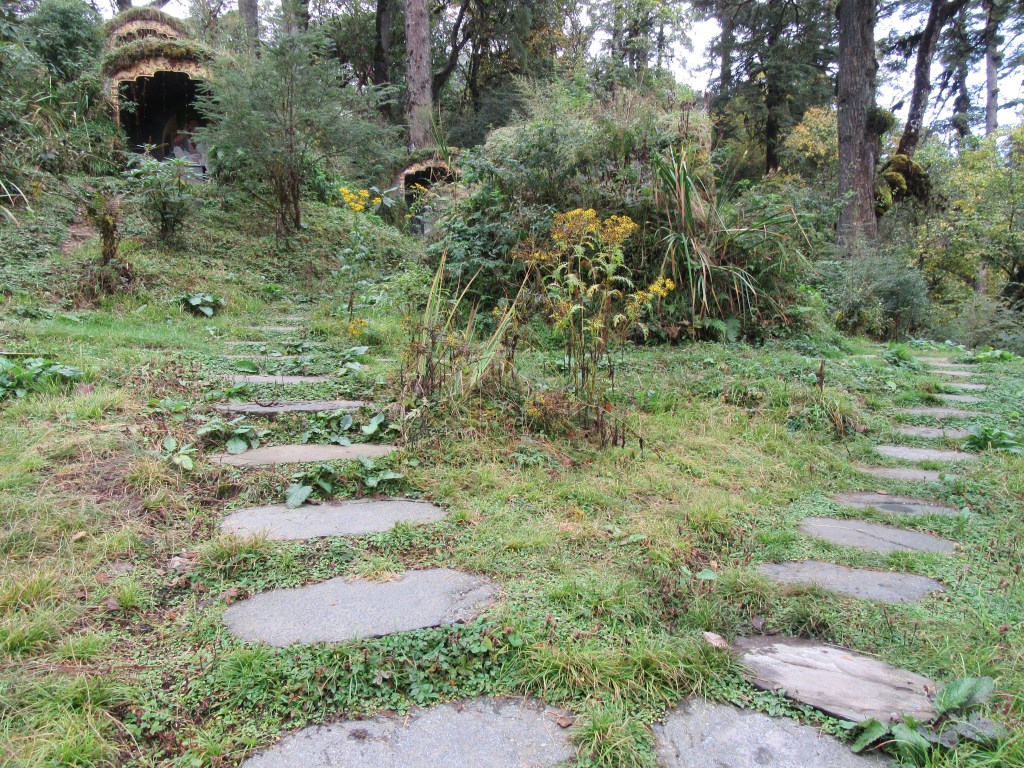

When Thinley tells me the caves were built in 2008, I pick up on a trend in the history of the places we’ve visited. It seems like every time I ask when something was built the answer is after 2000. This is not what I was expecting but it made me curious. Is the government trying to encourage more tourism? Did they get a big loan from the World Bank? No he says, it actually has to with Bhutan’s transition to democracy in 2008. Once the King turned over significant power and decision making to the districts, the districts started making moves on projects in their areas now that they had access to government funds. Interesting. And for the monasteries he says, the burn down all the time from the butter lamps so they’re always having to be rebuilt. It’s tough being a monk….
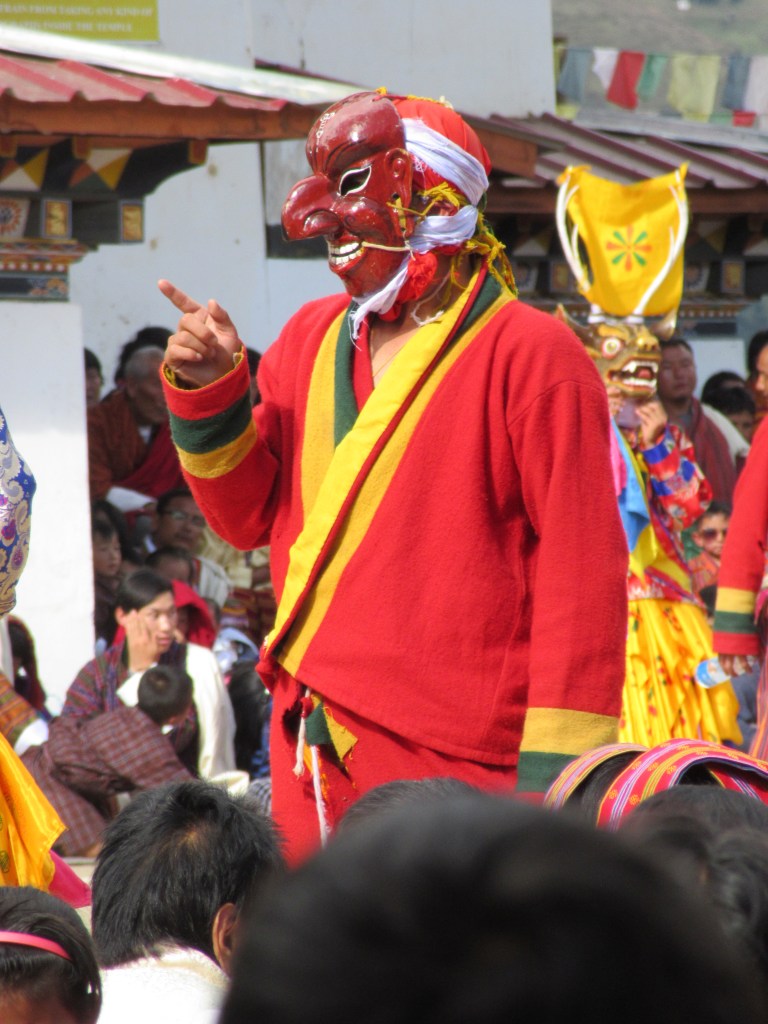
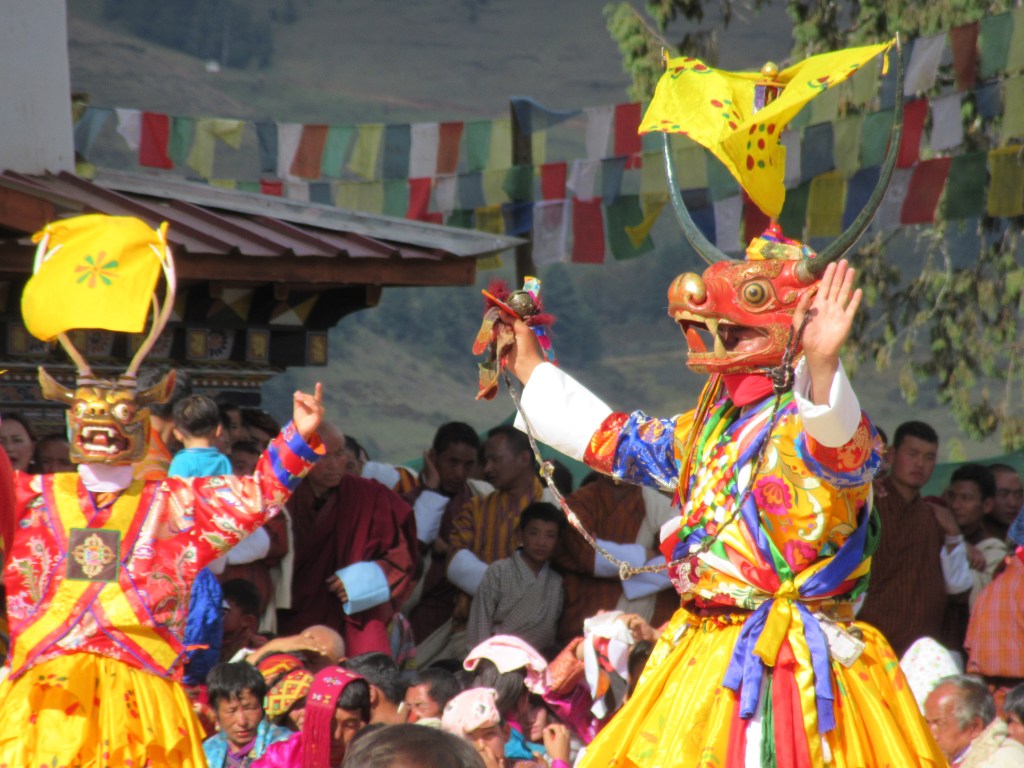
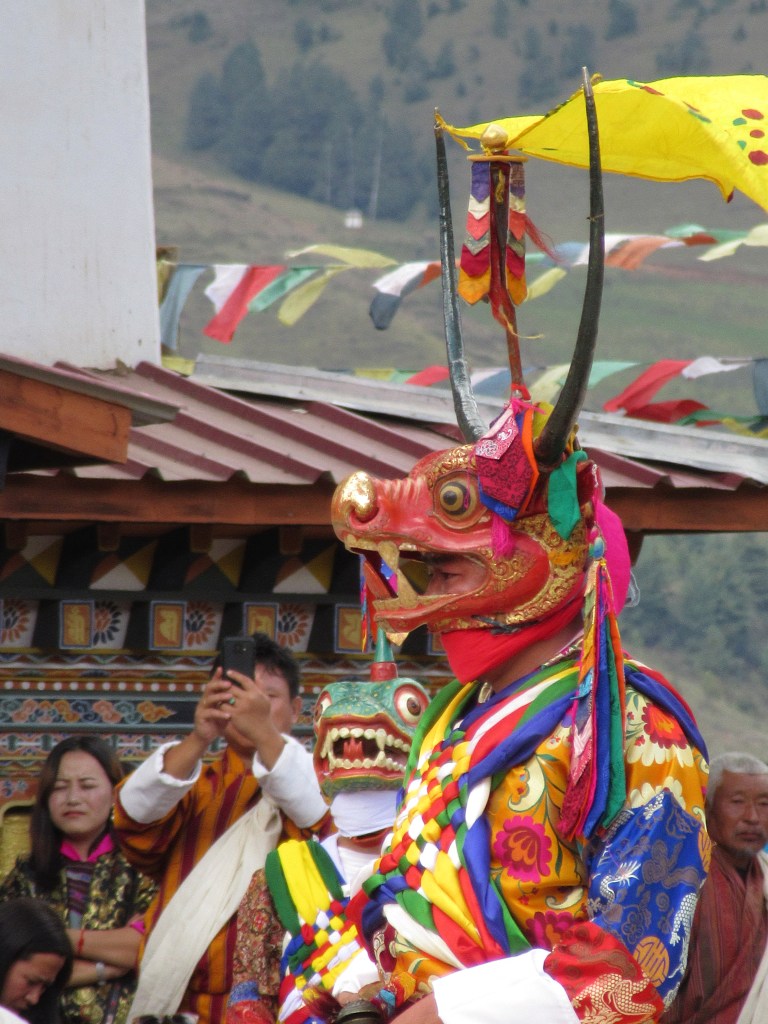
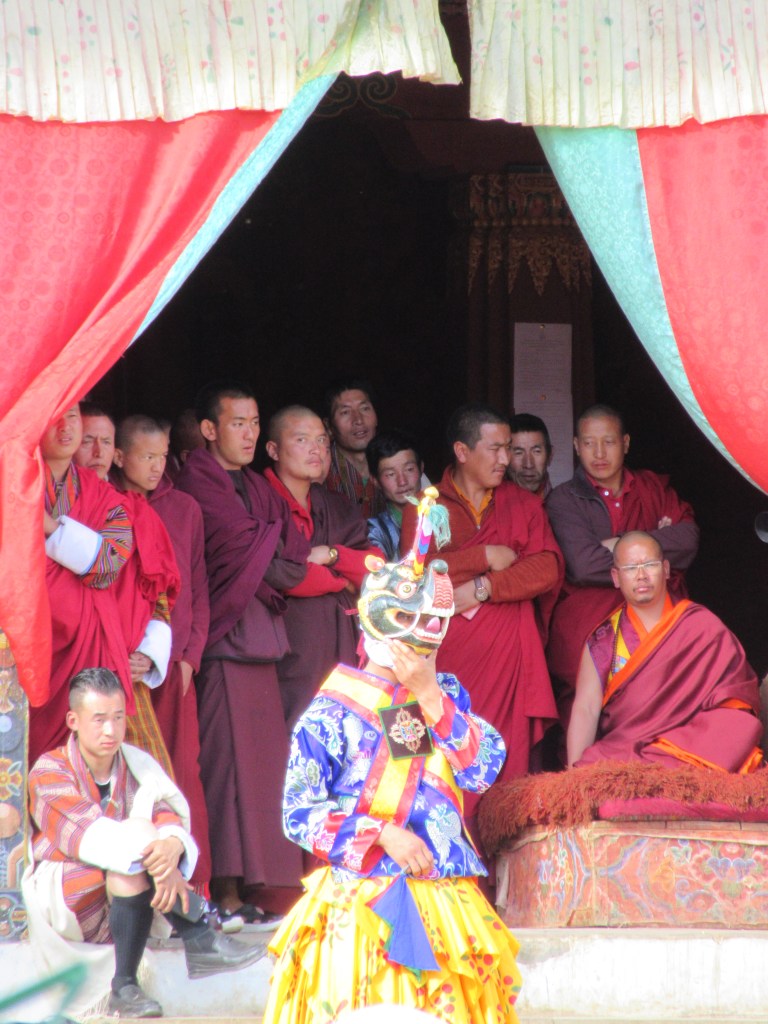
From here it’s on to the Gantye Tshechu (festival) which is a lot like the Thimphu festival but smaller, more authentic and local than the Thimphu festival. For this festival Bhutan Swallowtail provided me with traditional Bhutanese dress as the monasteries ask that all visitors dress formally for the festivals. Now I’m in the back seat of the car looking at the folded jacket and skirt and wondering what exactly I’m supposed to do with this. Is Thinley going to show me how to wear this? That would be pretty impressive. Turns out Thinley is going to help me find the ladies that are going to show me how to wear this when we get to Gantye, and those ladies turnout to be the ladies at the first garment shop we pass. After all, this is Bhutan and everyone seems glad to help. So these two ladies wrap me up and strap me in and then start dying laughing because the first lady that put the skirt on me put it on backwards. And so we repeat and get it right the second time and well, here you go. Meet me in a Kira and Toego.
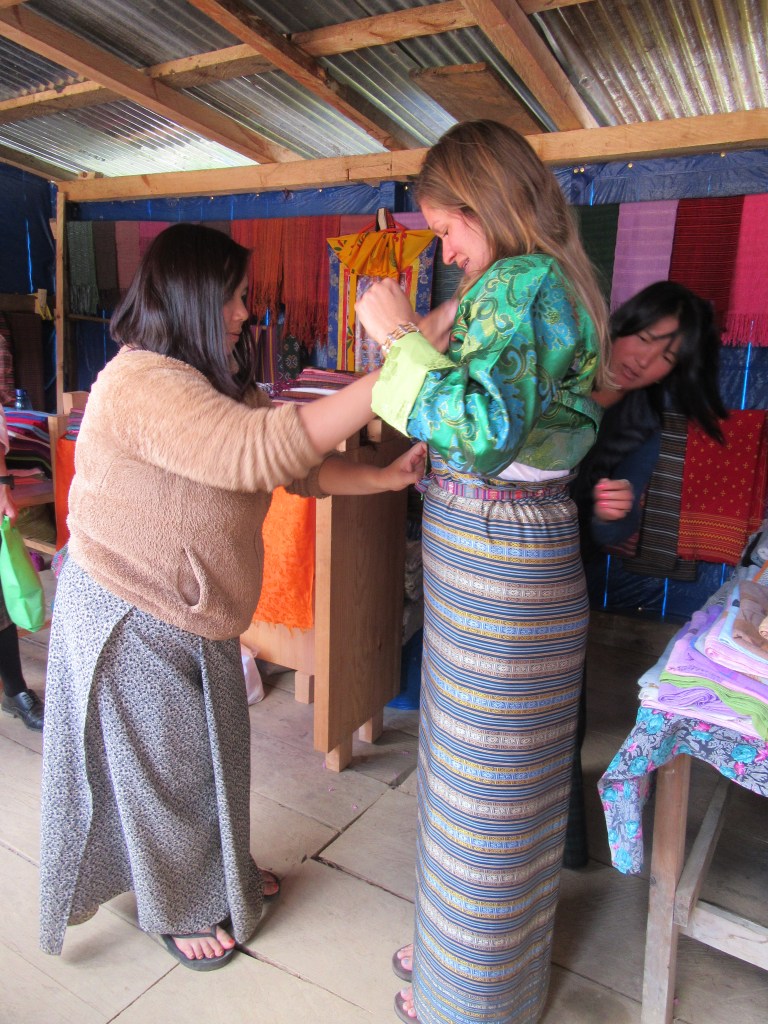


And we’re off to the festival, which as promised, is somehow even more magical than the Thimphu festival.
Now let me stop and give a big kudos to Thinley for never losing me in a crowd. I however, lost Thinley just about every time we stopped because I’d be following along and before I know it I’m pulling out my camera and getting distracted with something only to look up and realize I’d lost Thinley, until I’d see him just slightly ahead waiving at me, patiently waiting. This happened so many times I lost count, but I get the feeling he’s used to this.
And without further ado, here are pics from the Gangtey festival. Because let’s be honest, the pictures are a whole lot more interesting than anything I have to say about it.


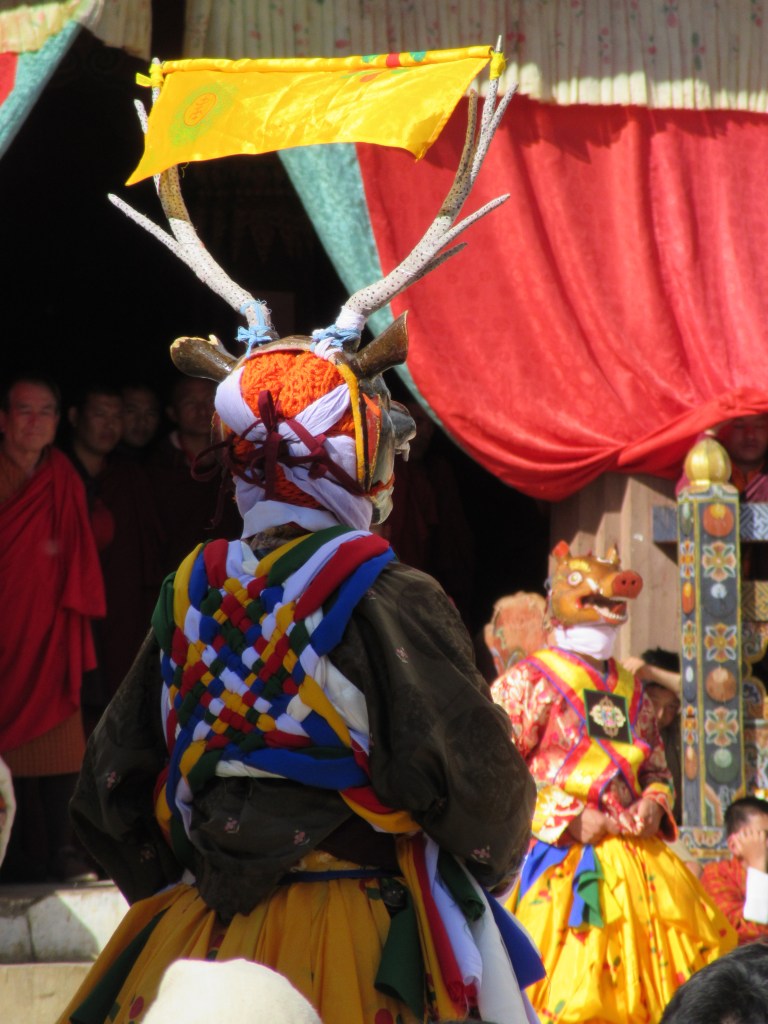
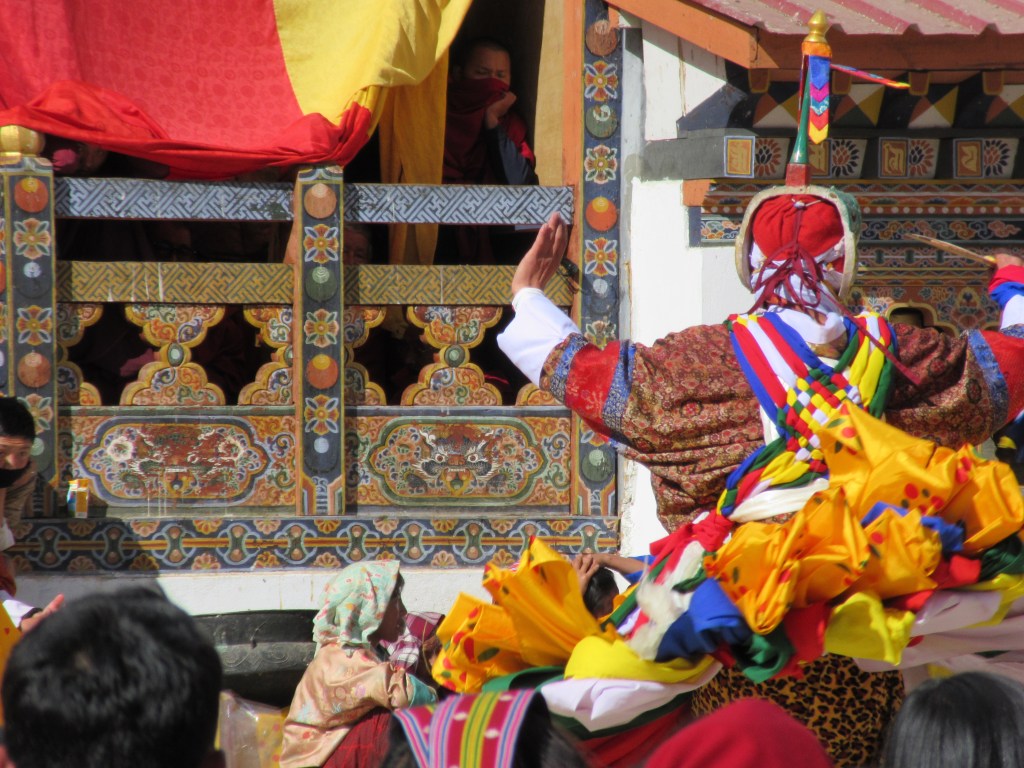
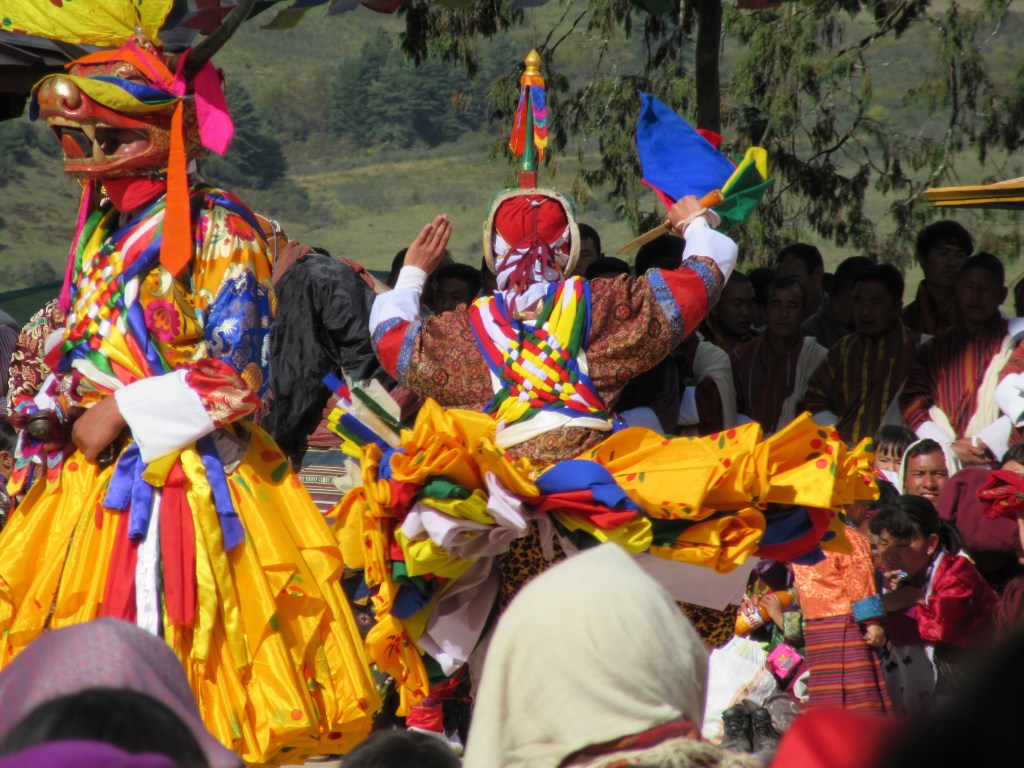
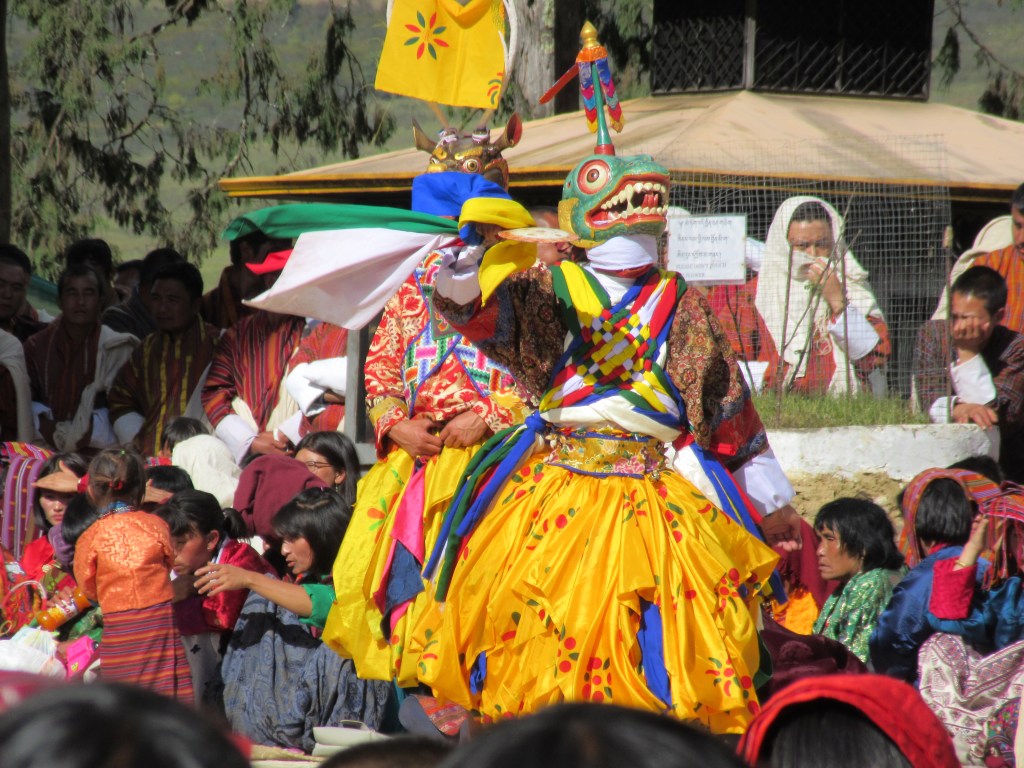

Toy guns are surprisingly prevalent and popular with young boys in Bhutan…sigh 😦 




These girls were the cutest! They wanted to talk and they kept unrolling their sleeves so that I would have to refold them. They were adorable and we even had matching purses 🙂
After the festival we had a one and a half hour trek to my homestay for the evening and I got to experience the beautiful Phobjikha Valley, home to the annual migration of the auspicious Black-necked crane. (They will be arriving in the next few weeks).
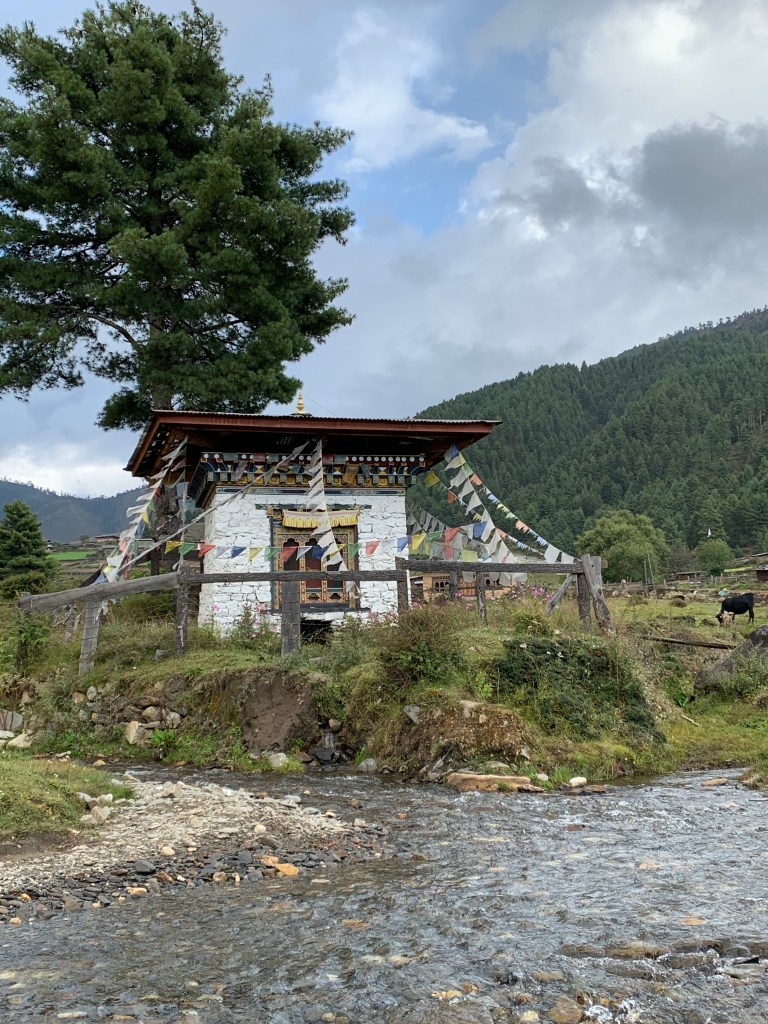
A water prayer-wheel 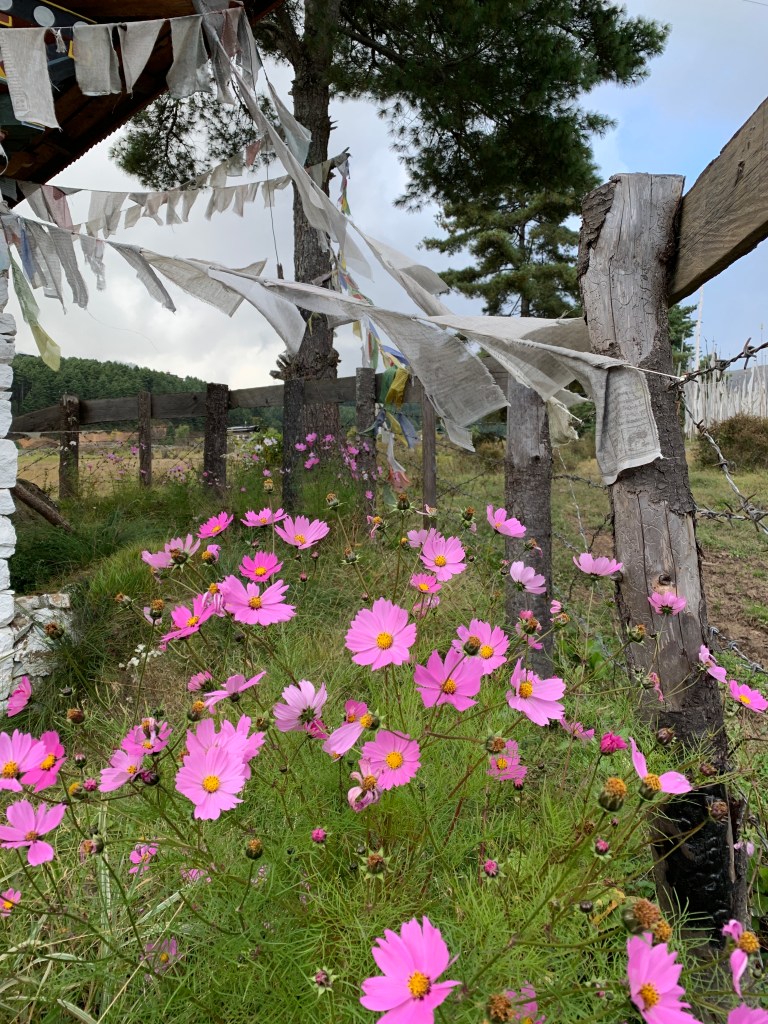


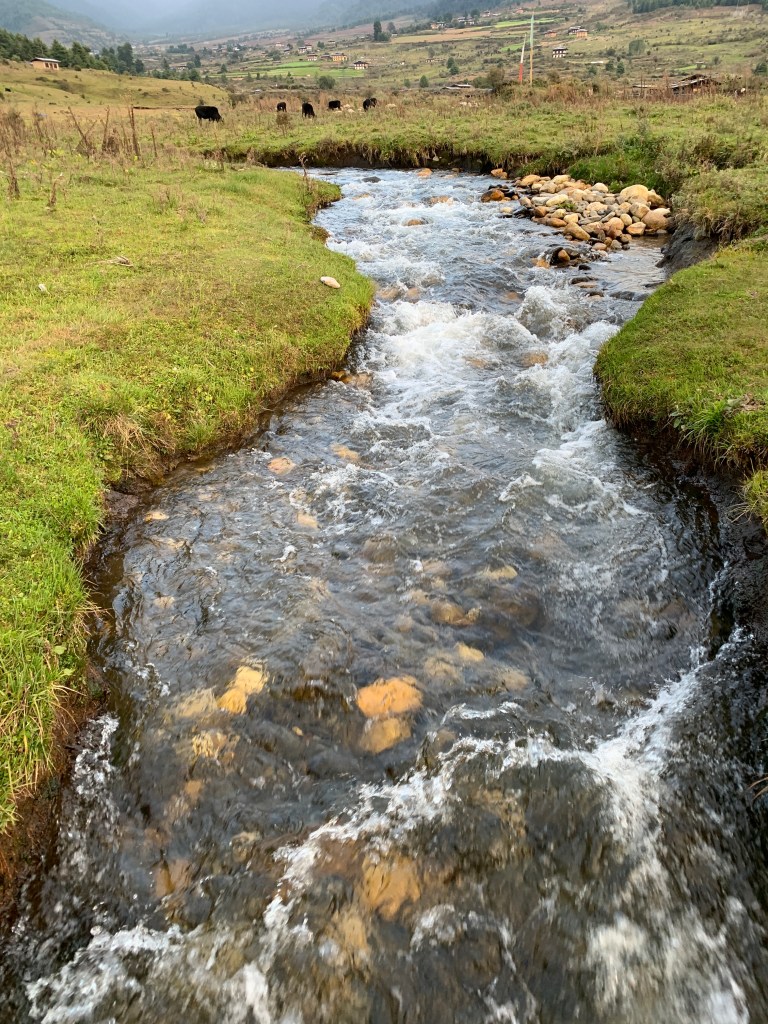

This was my first homestay traveling and such a lovely experience. The house is home to three-generations: grandparents, parents (and unmarried daughters) and their kids. The government is highly encouraging homestay to bring economic prosperity to residents of the sacred valley which averting and delaying the development pressures which continue to threaten the region. Thinley taught me to make the spiciest Ema Datshi in the entire country while we watched a little Bhutan’s Got Talent and I got a little more explanation on the Bhutanese method of finding a spouse: night-hunting. Now this sounds worse than it is and it goes something like this. In the more rural areas, at dusk the parents leave the house to go watch the fields for cheetahs and other night predators, leaving the single ladies at home alone. Enter single Bhutanese boys and their version of a Say Anything/John Cusack/boombox like-moment to stand outside the ladies windows and try to get their attention until the parents come back home and the guys hopes and dreams are dashed for the evening. Only in Bhutan.


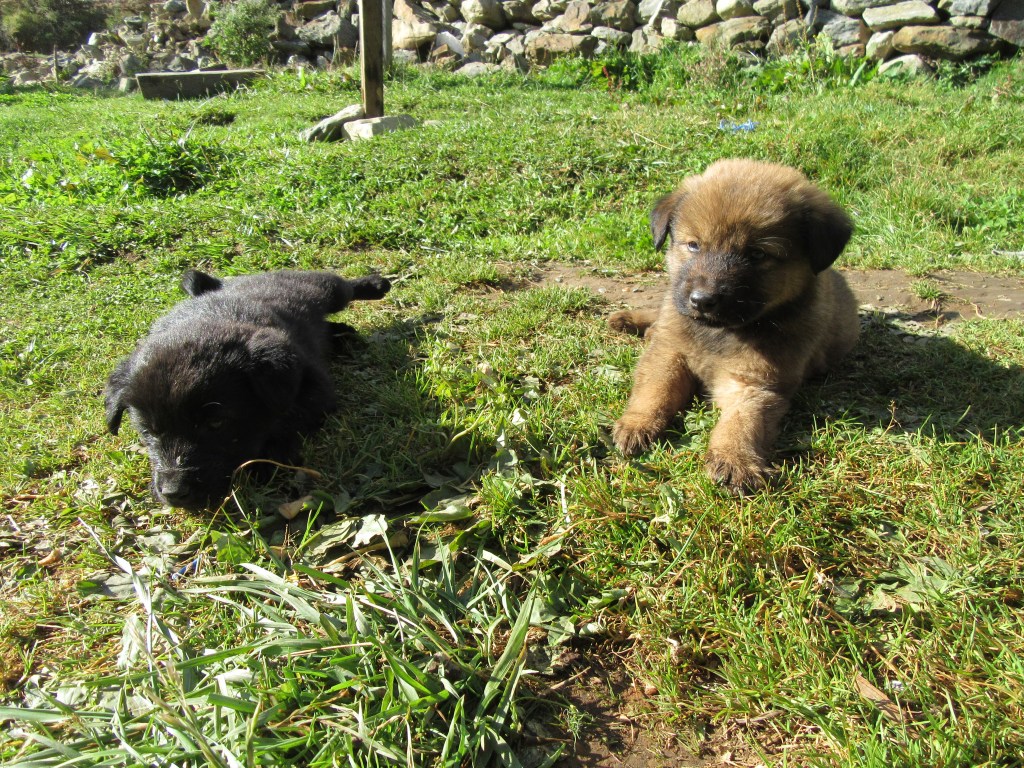
Puppies! 
So many shoes! 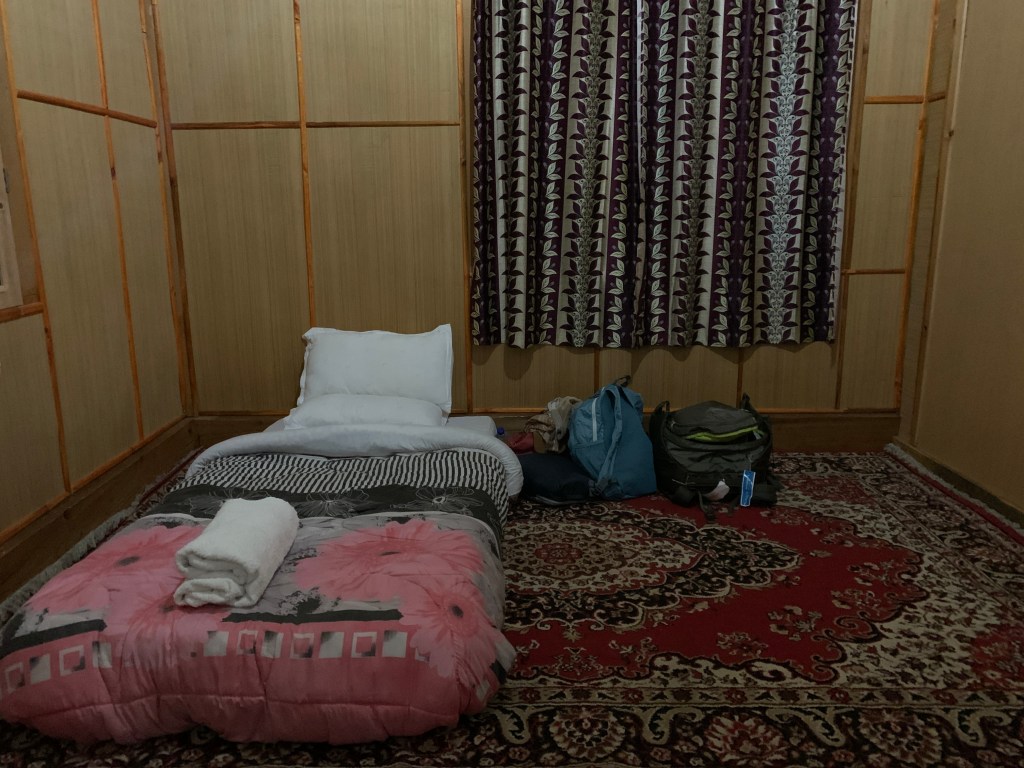
My room 
Bhutanese wall decor. More on this in Day 5. 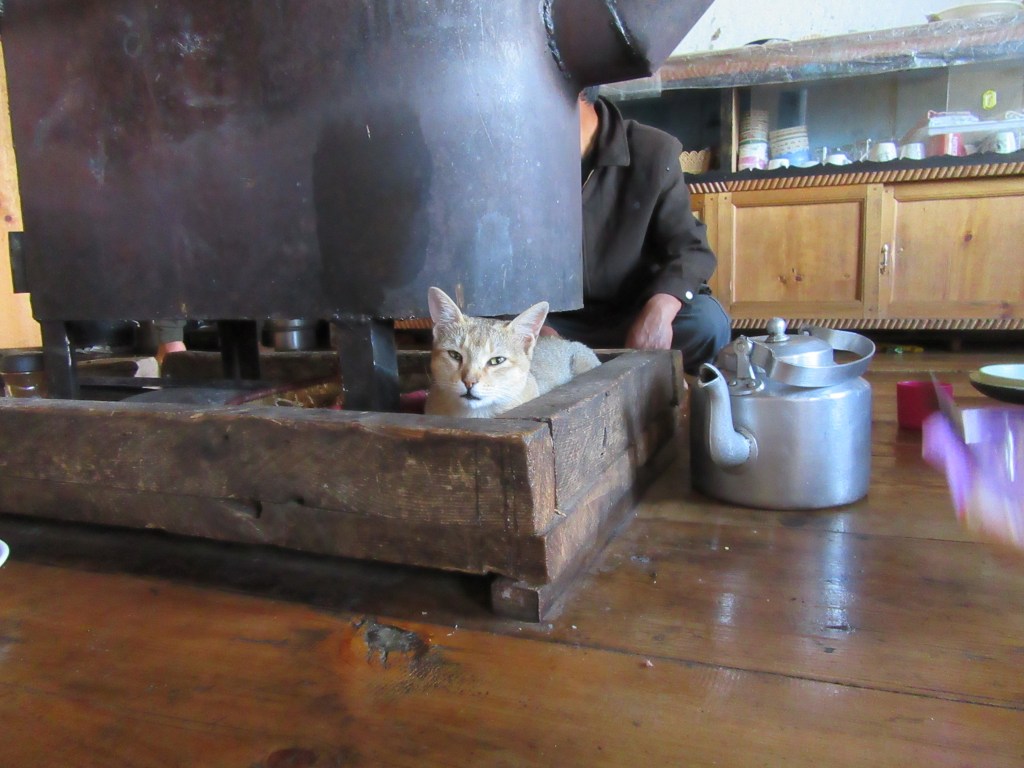
The cats always get the good spots
What a day.
Love,
rk
 Buddha & Boots
Another wonderful entry Rachel, thank you!!
LikeLike